I’ve been using AI in my work for a while now. Or at least, that’s what I tell myself. Not to write things for me, but to think. To have an interlocutor. To sharpen ideas. I like to believe I use it the way one uses a good sparring partner: someone who pushes back, helps you see what you can’t see, and refuses to let you settle for the first answer.
This week, I was preparing a series of seminars for my research stay in Australia. Four talks, a coherent series, a demanding audience. And this is the story of how I worked with Claude and ChatGPT to rethink my own work. But the story didn’t begin with Claude.
It began with a conversation about how to repackage my work. Because that, in fact, was what I needed to do. Not generate new ideas. Not produce new results. Repackage years of work for a specific audience, in a language that is not entirely mine—not only linguistically, but epistemologically—and in an academic environment that, although familiar, still feels somehow foreign.
This is not simply a matter of language. The problem lies elsewhere. In codes, references, cognates, ways of presenting ideas, ways of packaging knowledge. I know how to navigate this world, but I also know that I remain something of an outsider within it. And here I come to something that is difficult to write without sounding slightly arrogant. But I believe it is true.
The work I needed to do required a very particular kind of conversation. Someone who could understand simultaneously where my ideas come from and where they needed to go. Someone able to translate not words, but entire frameworks of thought. I’m not sure there was anyone physically close to me who could do that work with me. Not because my work is exceptional, but because the people with whom I could have had that conversation are far away, busy, or simply not part of my everyday life here. So, although I did ask a few humans for help on Telegram, I started talking to AI. And then I kept talking to AI. And then I went back to AI.
The first conversations were with ChatGPT, trying to work out how to structure the seminars. Then came Claude. And afterwards, I returned to ChatGPT. Not because one was better than the other, but because, without quite realising it, I was using each of them for different things.
Using my own material, I worked with ChatGPT to sketch a first structure. Somewhere in that conversation, and prompted by a suggestion for a title, the idea emerged that these shouldn’t be just four talks, but a series. At that point, I had the material. What I lacked was the formulation. So I asked Claude to help me find it.
What followed were hours of conversations. Title by title. Abstract by abstract. Structure by structure. Claude would ask, I would answer. Claude would suggest, I would correct. Or not correct.
And that’s where things become complicated. Because there were moments when I corrected with surgical precision— “It’s not that AI is discussed as a simple phenomenon. It’s that the instrumental and the ethical seem to exhaust the conversation, and they don’t.” —and the argument immediately became sharper and more recognisably mine. Those are the moments I enjoy when working with AI. The moments that make me think that yes, I am constructing knowledge, and the machine is merely the instrument.
But there were other moments when I accepted a formulation simply because it sounded good. Because the English flowed. Because the structure was elegant. Because following was easier than resisting. And in those moments, I wasn’t really constructing knowledge. I was accepting a formulation before I had genuinely made it my own.
The difference between those two kinds of moments is not always obvious while they are happening. It becomes clear later, when you try to explain aloud what you have written and discover that some sentences come naturally, while others have to be searched for.
The ones that come naturally are yours. The ones you have to search for are not.
At the end of the process, I asked Claude to describe, as unsparingly as possible, what it had done. This is something that worries me—and something that constantly feeds my impostor syndrome. I then asked it what proportion of the content was mine and what proportion was its own. The answers were uncomfortable in exactly the right way. The content—the central ideas behind each seminar—was mine. But there were moments when I struggled to distinguish how much of the form reflected my own decisions and how much reflected my willingness to accept formulations simply because they worked.
There is one thing Claude said that I haven’t been able to stop thinking about: “You use AI to build knowledge when you know exactly what you don’t want. When you don’t, AI tends to build it for you.” It’s true. And it’s a problem that has no technical solution. There is no prompt that solves it. There is no way to ask Claude to speak only when you already know what you want to say—because precisely when you don’t know, that’s when you most want it to speak.
What I can do, however, is become more aware of the moment when I stop resisting. More suspicious of what sounds good. More faithful to the way I think in Spanish when I write in English. And more honest about what is mine and what belongs to “us”—because us exists, whether I like it or not, and pretending otherwise is perhaps the easiest way to surrender ground without even noticing.
And then I went back to ChatGPT. Not to keep writing the abstracts, but to understand what I had actually been doing. And there I encountered something different. While my conversations with Claude had revolved around formulations and resistance, my conversations with ChatGPT seemed to give me something else entirely: a picture of continuities. A picture of questions that kept reappearing even though I had always experienced them as separate topics. Personal Learning Environments, digital competence, AI, assessment, professional development—not as independent lines of work, but as different ways of returning, again and again, to the same underlying concerns: agency, judgement, and the future.
I don’t know whether that picture is correct, and I suspect one of the risks lies precisely there. Because AI systems do not only generate text. They also generate reflections. Sometimes I have the odd sensation that I am arguing partly with myself—or at least with something whose time I do not mind wasting. And while I am perfectly aware that reflections can be dangerous—as Jesús Salinas has reminded us for years—not because they are false, but because they can be too convincing, I also find myself valuing these moments of reflection.
Perhaps that is why, if I have to draw one conclusion from this whole process, it is not that one tool writes better than another, nor that they somehow know me better. It is something else: I work best with AI when I know who I am, even if I still do not know how I want to say what I mean. Because very often I do not yet know exactly what I want to say. But I do know what does not represent me: the metaphors I would not buy into, the words I would never use in Spanish, the simplifications that irritate me, the ideas that sound good but never quite feel like mine.
And I suspect that an important part of intellectual work with AI consists precisely in sustaining those resistances long enough for something recognisable to emerge.
And, of course, that is not where the conversation ends. Quite the opposite. Once something begins to look recognisable, I take it back to humans. To colleagues, friends and fellow obsessives generous enough to tolerate my endless reformulations. Some things survive those conversations. Others don’t. Some become better. Others are dismantled and rebuilt again. Which is probably as it should be.
Because AI is not where I finish thinking. It is often where I begin to have something worth discussing.
Claude reflects something back to me. ChatGPT does too. But perhaps what matters is not how they see me. Perhaps what matters is that, by working with them, they force me to pay closer attention to how I work.
A note on how this text was written
It would be rather incoherent to write a post about how I work with AI and then pretend that this text emerged solely from my own head. The experiences I describe are mine. The seminars, the conversations and the reflections are mine. But I did not write this text alone.
Significant parts of the central sections originate from a conversation with Claude, whom I asked to describe—without complacency—how our joint work had unfolded. Other parts, particularly those concerning the ways I organise ideas, the continuities across apparently separate topics, and the questions that run through my work, emerged through conversations with ChatGPT before and after those sessions with Claude.
I have written, reorganised, deleted and rewritten many times. Some sentences are almost entirely mine. Others retain formulations very close to those proposed by the machines. And, honestly, I can no longer always tell where one ends and the other begins. That does not worry me too much. What would worry me would be pretending that such a boundary does not exist.
This post is not intended as a demonstration of pure authorship. Rather, it is an attempt to reflect on a way of working that is now inevitably hybrid, negotiated, and occasionally uncomfortable. And perhaps that discomfort is reason enough to talk openly about how it came to be written.

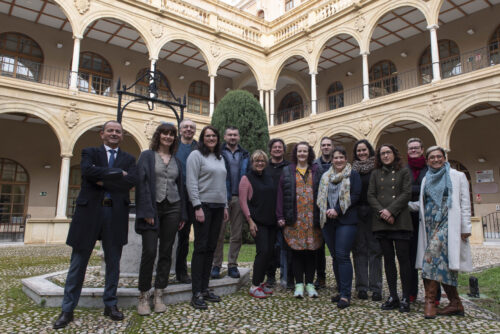 Taking part in the CUTIE project from the University of Murcia has been a deeply enriching experience. Not only because it has allowed us to advance in our understanding and dissemination of Digital Teaching Competence (DTC) and broader educational digital transformation within our institution, but also because it has opened up spaces to talk, reflect and build together from a very practical, close, flexible perspective — always grounded in a strong educational commitment.
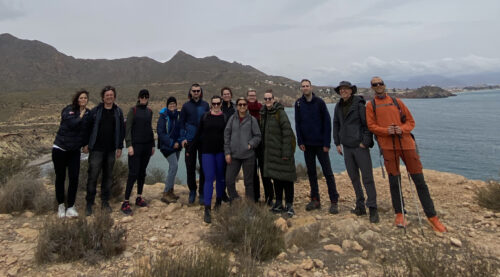 30I hope everything we have produced from our project can be useful to others. That is, after all, the essence of an ERASMUS project: that what we do in one small corner — in our case, Murcia — might open conversations and support digital transformation processes elsewhere.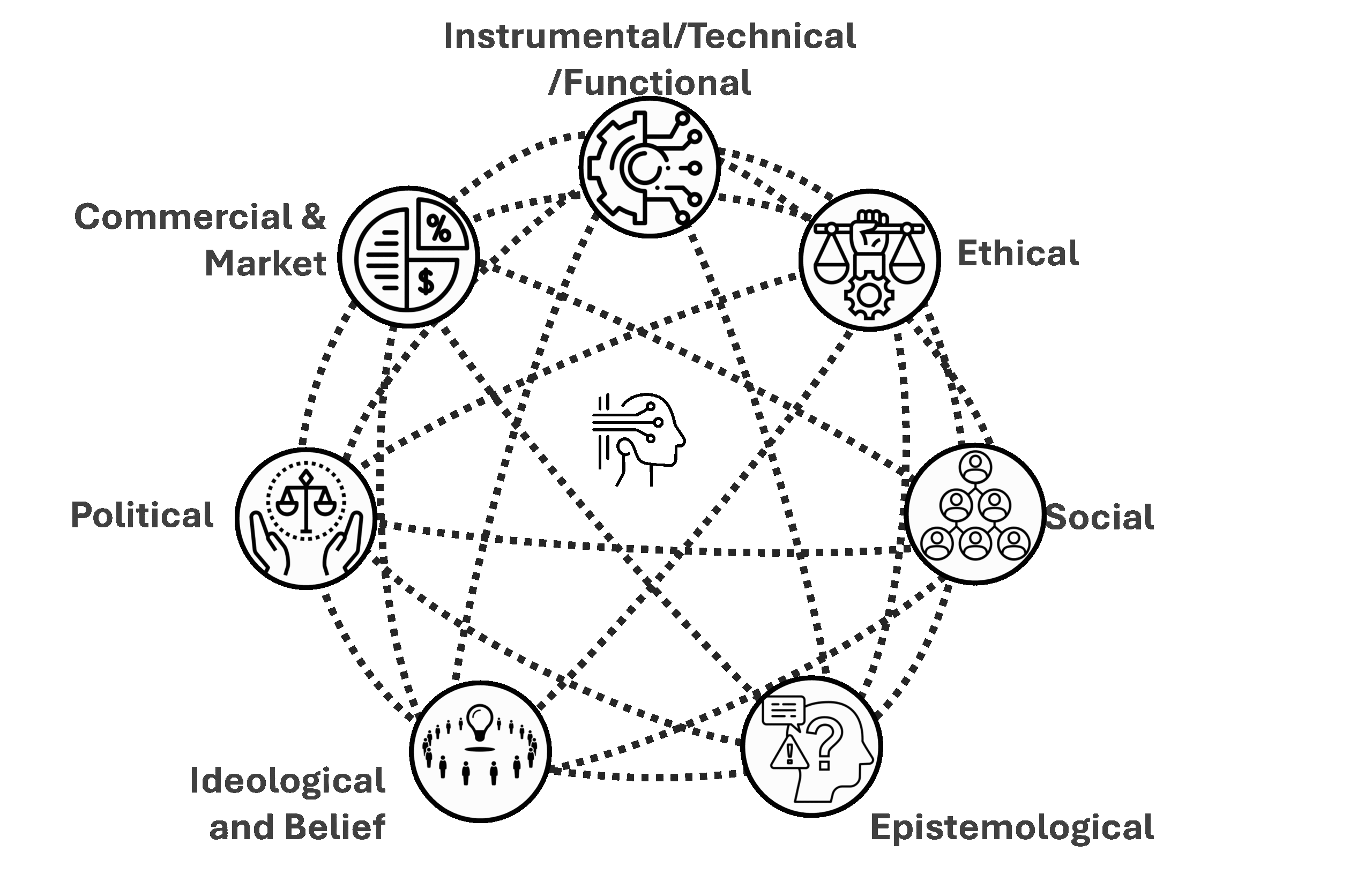


 nding on context, the children’s ages, or even mood. What matters most for educators is:
 The facilitator is responsible for proactively leading the group, ensuring efficient organisation, clear communication, and a positive working environment. This role involves distributing tasks among group members, ensuring everyone understands their responsibilities, and supervising the completion of work within the established deadlines. Additionally, the facilitator reviews the group’s deliverables to ensure they meet quality standards in content, format, and style. To achieve this, they may use digital tools such as Grammarly or DeepL Write to enhance the precision and professionalism of the texts.
 The translator is responsible for selecting, each week, four core concepts directly related to the weekly task. These concepts must connect to the task’s content, the type of media produced as part of the task, or the class dynamics used for presenting the task. At least one concept must address the geek component, one must relate to the methodological-pedagogical aspect, and two must focus on the
  The analyst is responsible for conducting the final reflection of the assignment and evaluating group members’ performance each week. This role requires critical and metacognitive abilities to analyze both individual and collective learning, as well as the dynamics of the group’s teamwork.
 The Star is a key group member responsible for presenting the task, collecting feedback from both the professor (Linda) and peers, and using that feedback to improve the task. This role requires strong communication skills, active listening, and the ability to reflect on and constructively implement feedback.
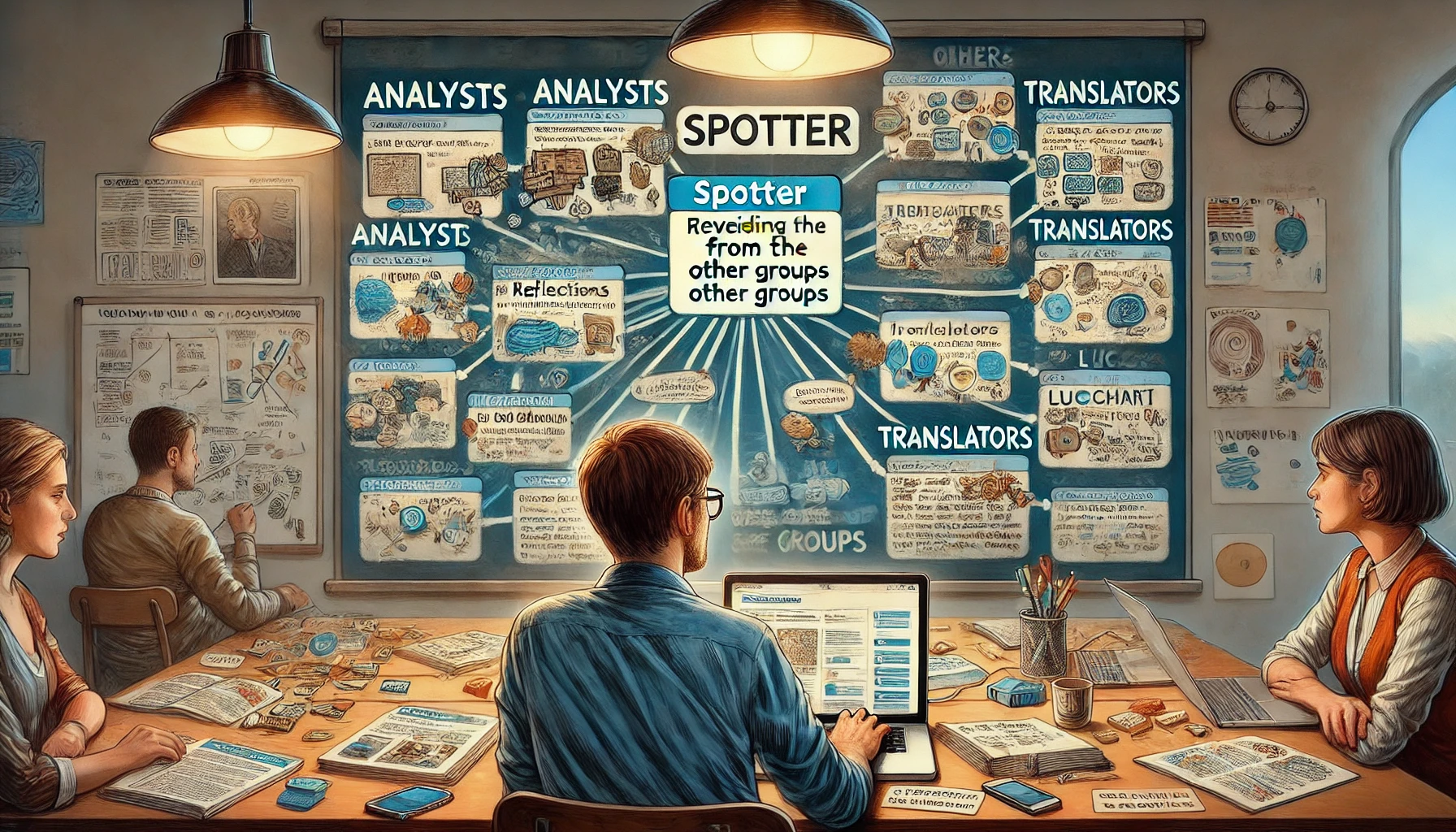 The Spotter is a key member of the group responsible for reviewing the blogs of other groups and analysing the posts of the Analysts and Translators from at least two groups in the class for the PREVIOUS task. Their mission is to identify what their group has not considered, whether concepts, reflections, or approaches, and bring new perspectives to enrich the group’s work.





 university professorship in Educational Technology. Perhaps because of this, I do not intend to make a definitive theoretical or epistemic stance. This work is not meant to be ‘my legacy’ or a declaration of what I intend my research to be from now on, precisely because the mission of an academic, at least from my point of view, should be reviewed, rethought, and redirected continuously.


 On 30 December 2023, the DALI project -Data Literacy for Citizenship- (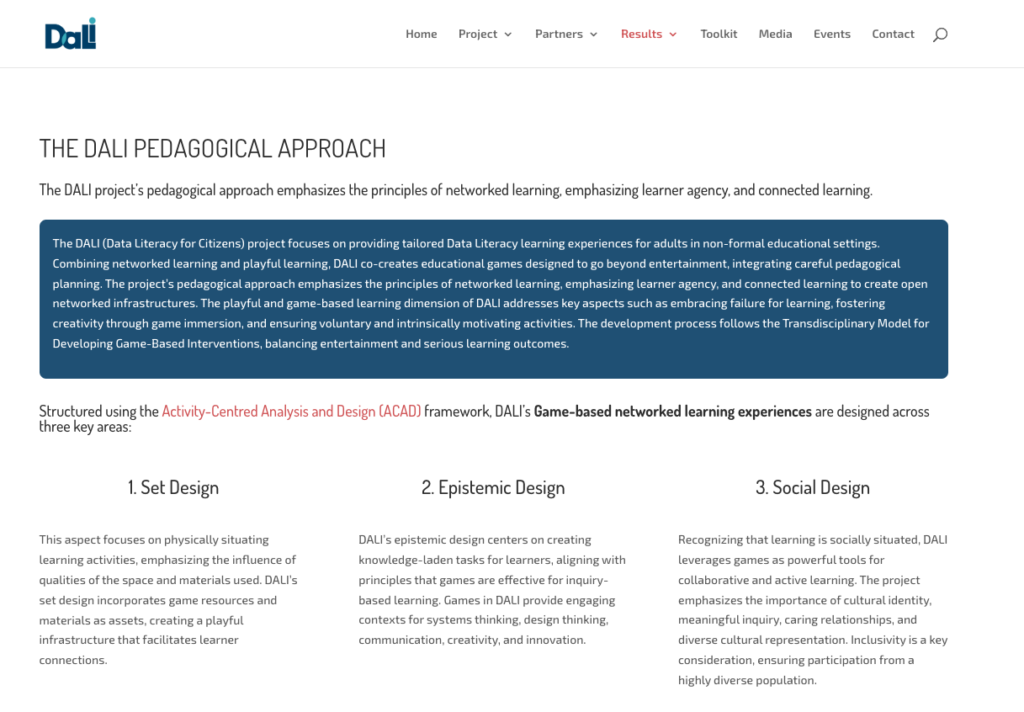

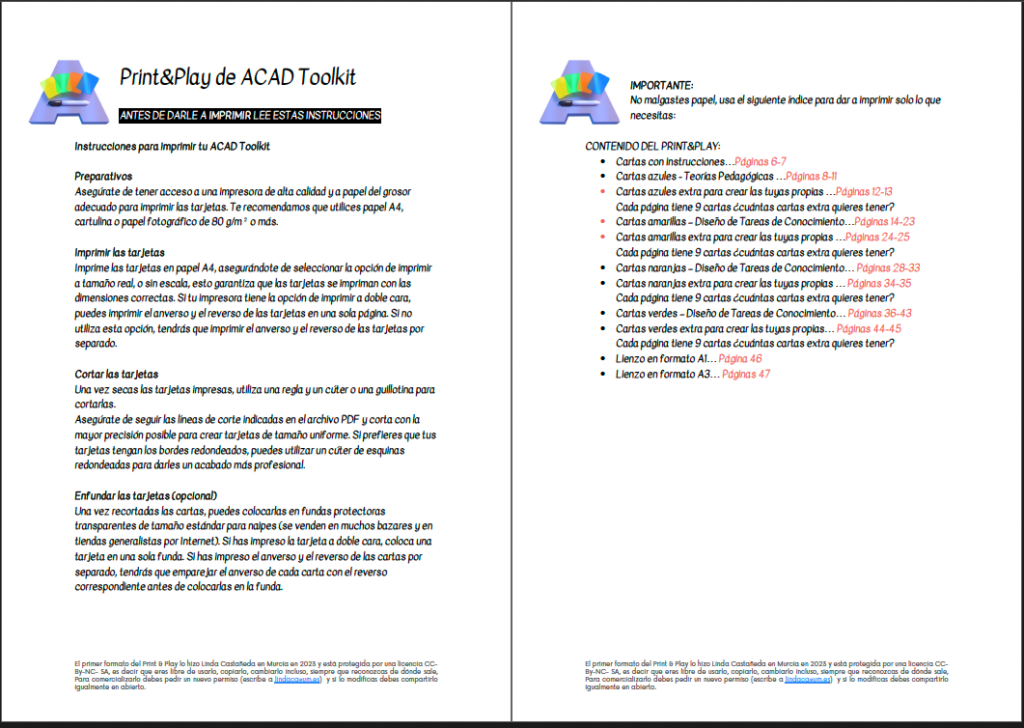


 Inspirado en roles como el theoritician de otras propuestas como la de De Wever et al. (2010), este rol puede clasificarse por su función, entre los que ayudan a los alumnos a formular lo que saben los estudiantes y a integrarlo, así como a los que pretenden incentivar el pensamiento de los alumnos y mejorar su razonamiento (Johnson et al., 1999).




 than 75 tools and I hope that, having incorporated it into the way they work with technology, it will be useful as a revival of their approach to technology
 of documenting everything that happens in the group, having the freedom to do his/her task in the format he/she considers most appropriate, and the students are encouraged to “tell the stories” of their groups using the variety of formats allowed by ICT. It is hoped that such a chronicle can serve, in addition to the teacher’s obvious process evaluation purposes, the group as a field notebook and record that will enable them to make decisions about whether to maintain or modify their own internal work dynamics.
 The curator is in charge of compiling and organizing in a schematic way all the sources of information that the group has used for the development of the activity. In addition, he or she must be in charge of sequencing the documentation indicating the process carried out and linking and referencing (according to APA standards) this documentation in a schema (mind map) so that this mechanism allows students to make a representation of a part of the cognitive structure they have set up for the specific task (McKeachie et al., 1987, p. 15).
 classified by its function, among those that help students to formulate what they know and to integrate it, as well as those that aim to encourage students’ thinking and improve their reasoning (Johnson et al., 1999).
 Inspired by the role of Analyst described in some of the works referred to in Strijbos and De Laat (2010), the analyst is the role responsible for making the final reflection of the work and also make the weekly evaluation of the performance of group members.
 The role of the star is to present to the whole class the final product of the weekly tasks, attending to the requirements specified by each task.
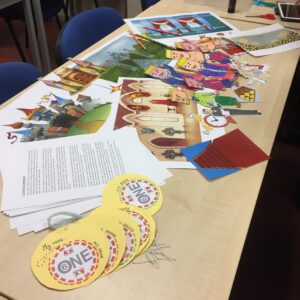
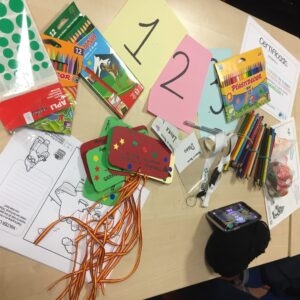
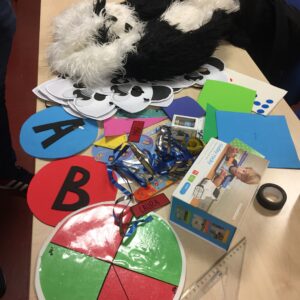
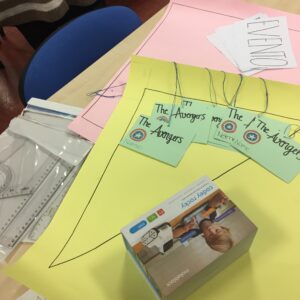
 If for all the institutions around the world the digital transformation of education is an inexcusable necessity, for the European Union it is one of its top current priorities.





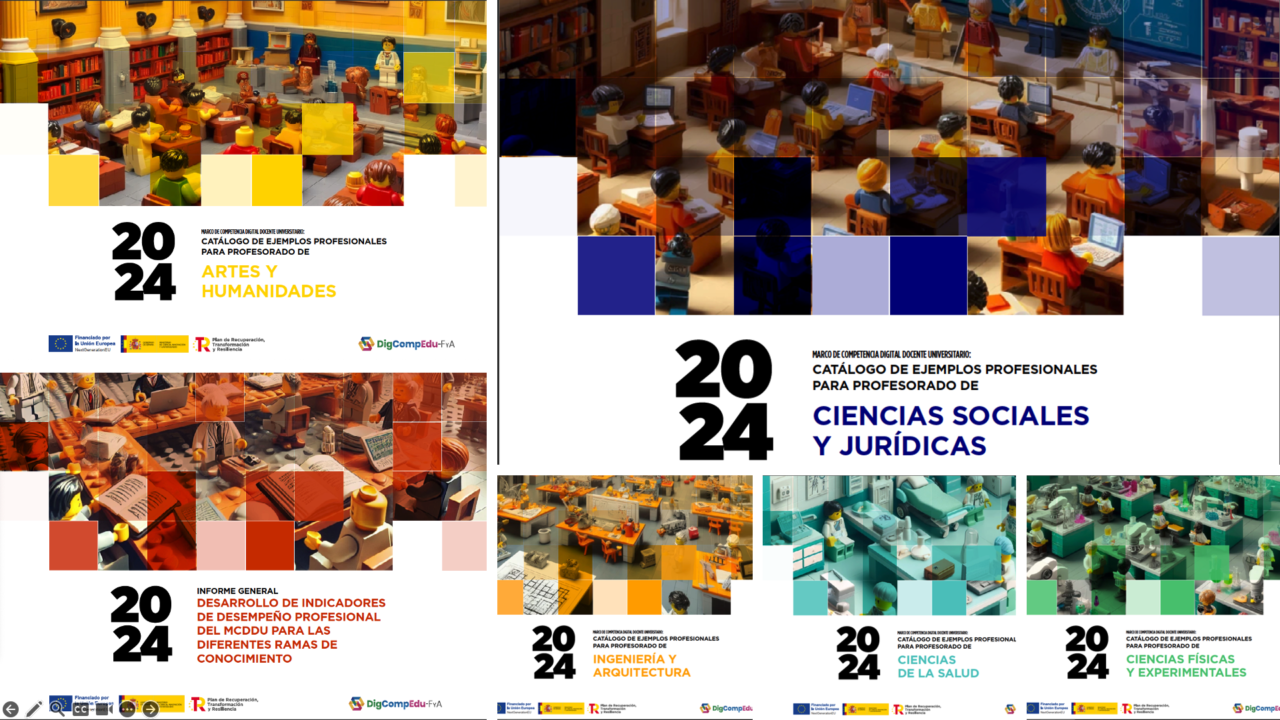
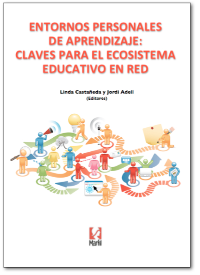 Como algunos de vosotros ya sabéis, acaba de salir a la calle un libro que hemos editado el profesor







Emiliano Pereira González
Antonio Ruiz Martínez
Report and Technical Coordination
Linda Castañeda y Núria Vanaclocha.
Universidad de Murcia
Proyecto Competencias Digitales del Profesorado- Formación y Acreditación. DigCompEdu-FyA.
Real Decreto 641/2021, de 27 de julio, por el que se regula la concesión directa de subvenciones a universidades públicas españolas para la
modernización y digitalización del sistema universitario español en el marco del Plan de Recuperación, Transformación y Resiliencia
Ministerio de Universidades. BOE-A-2021-12614
Permanent link to the Report at the UM DIGITUM Repository https://lnkd.in/dUMwUc6d